
Marine Mammal Encyclopedia
Discover the World
of Dolphins
From tropical coastlines to deep ocean trenches — explore 40+ species of the ocean’s most intelligent creatures.
Marine Mammal Encyclopedia
From tropical coastlines to deep ocean trenches — explore 40+ species of the ocean’s most intelligent creatures.
40+ Species

Inia geoffrensis
The Amazon River Dolphin is the largest river dolphin in the world. Found in all shades of pink — from dull gray-pink to bright flamingo pink — the color variation results from water clarity; the darker the water, the pinker the dolphin. Their cervical vertebrae are unfused, allowing 180-degree head rotation. They have a very long, narrow beak lined with whiskers used to locate food in mud.

Tursiops truncatus
The world's most recognized dolphin — dark grey on top, fading to light grey on the underside. Bottlenose Dolphins are highly intelligent and social, with documented use of tools, signature whistles, and complex alliances. A layer of blubber makes up approximately 18–20% of their body weight.

Lipotes vexillifer
The Chinese River Dolphin is widely considered the first dolphin species driven to extinction by human activity — though no formal extinction has been declared. The Baiji had a pale blue-grey upper body, white belly, and a distinctive upturned beak. Its eyes were tiny and set high on the head. It navigated almost entirely by echolocation.

Cephalorhynchus commersonii
One of the most striking dolphins in the world — bold black-and-white coloring that resembles an orca in miniature. The head, dorsal fin, pectoral fins, and tail are jet black; the midsection is pure white. The body is torpedo-shaped with no beak — just a rounded snout. Despite their small size, they are extraordinarily energetic swimmers.

Delphinus delphis
One of the most abundant marine mammals on Earth — with a global population estimated over 3 million. The Common Dolphin has a distinctive hourglass color pattern: dark back, white belly, yellow-gold flank patches in front of the dorsal fin, and grey patches behind.

Lagenorhynchus obscurus
Among the most acrobatic of all dolphins — famous for spectacular leaps, somersaults, and backflips. Coloring is distinctive: dark charcoal-black on the back and dorsal fin, with a pale grey-to-white flank area marked by two diagonal streaks. The belly is white.

Lagenodelphis hosei
A stocky, robust dolphin with a short, thick beak — the shortest of any member of the family Delphinidae. Coloring: blue-grey to brownish-grey back, a distinctive dark lateral stripe running from the eye to the anus, cream-to-pink sides, and a white belly. First described from a skull in 1956; not confirmed alive until 1971.

Platanista gangetica
A living fossil — one of the oldest dolphin species on Earth, virtually unchanged for millions of years. It is functionally blind: its eyes lack a lens and can only detect the direction of light. The animal navigates, hunts, and socializes entirely through echolocation. It swims on its side with one flipper dragging along the riverbed — a behavior unique among dolphins.

Cephalorhynchus hectori
One of the smallest and rarest marine dolphins in the world. Easily recognized by its distinctive rounded, Mickey Mouse-ear shaped dorsal fin — unique among all dolphin species. Pale grey body with black and white markings and a crescent-shaped black mark that runs between the eyes and blowhole.

Lissodelphis borealis
The only dolphin in the North Pacific without a dorsal fin — giving it an unmistakably sleek, torpedo-like silhouette. Jet black on the entire upper body, with a brilliant white belly patch and white beak tip. The body is extremely streamlined, long, and slender.

Orcinus orca
The largest member of the dolphin family and the apex predator of the ocean — with no natural predators anywhere in the world. The largest adult males reach 32 feet and 6 tons. Each individual can be identified by the shape of its dorsal fin and the unique grey saddle patch behind it.

Lagenorhynchus obliquidens
A highly energetic, boldly patterned dolphin with a striking three-tone color scheme. Dark charcoal-black back, bright white sides, pale grey flank stripes running from above the eye toward the tail, and a light grey patch behind the hooked dorsal fin.

Stenella attenuata
Born spotless — adults become increasingly spotted throughout life. Calves are born with a dark grey-blue cape and no spots; adults are heavily speckled on both back and belly. The spotting pattern can reliably indicate approximate age.

Grampus griseus
Unlike most dolphins, Risso's has no prominent beak — just a blunt, rounded snout with a distinctive vertical crease down the forehead. Adults become increasingly white with age as scar tissue accumulates from encounters with squid and other Risso's Dolphins.

Steno bredanensis
Named for its uniquely wrinkled, cone-shaped teeth. The head slopes smoothly into the long beak with no forehead crease — a distinctive feature called a reptilian profile. Dark purplish-grey to black on the back; lighter grey sides with irregular pinkish-white blotch markings on the belly.

Stenella longirostris
Named for its spectacular aerial spinning — leaping up to 3 meters out of the water and rotating up to 7 times on its body axis before re-entering. The body is long and slender with a very long, narrow beak. Coloring is tripartite: dark grey back, light grey sides, white belly.

Stenella coeruleoalba
A boldly patterned, sleek offshore dolphin with a distinctive lateral stripe system. The dark blue-grey back (cape) contrasts sharply with the white-to-pale pink belly. A dark stripe runs from the beak through the eye to the anus. A secondary shorter stripe runs from the eye down toward the flipper.

Lagenorhynchus albirostris
A robust, stocky dolphin of the cold North Atlantic with a complex color pattern. The back is dark grey-black; flanks are patterned with pale grey patches; the belly is white; and the beak is variable in color from white to grey-cream. The body is powerfully built with a thick layer of blubber.

Pontoporia blainvillei
The Franciscana has the longest beak of any dolphin relative to body size — sometimes exceeding 15% of total body length. It is greyish-brown on top with a pale belly, and inhabits shallow coastal and estuarine waters. Despite appearances, it is not a true freshwater river dolphin but belongs to its own family Pontoporiidae.

Sousa teuszii
The Atlantic Humpbacked Dolphin is named for the distinctive hump found in front of its small dorsal fin — a characteristic it shares with other Sousa species. Coloring ranges from pale grey to brownish-grey. Population estimates suggest fewer than 3,000 individuals remain, making it one of the rarest marine mammals on the continent.

Stenella frontalis
Like the Pantropical Spotted Dolphin, Atlantic Spotted Dolphins are born without spots. Calves are uniformly grey; spots develop gradually — first on the belly, then spreading to the entire body. Old adults may be so heavily spotted that the dark and light areas merge, creating an almost entirely grey appearance. Distinguished from the Pantropical Spotted by a stockier build and broader beak.

Lagenorhynchus acutus
A robust, powerfully built dolphin with a striking color pattern. The back is dark grey-black; the sides show a white patch behind the dorsal fin, followed by a distinctive yellow-ochre streak extending toward the tail. The belly is white. The name comes from the prominent white lateral blaze. The short, stubby beak and muscular build distinguish it from the more slender Common Dolphin.

Cephalorhynchus eutropia
One of the four Cephalorhynchus species, the Chilean Dolphin is the least studied of all. It has a stocky, robust build with a small rounded dorsal fin (like all Cephalorhynchus). Coloring is dark grey to black on the back and head, with white patches on the chin, chest, and belly, and a pale grey flank patch. Also called the Black Dolphin for its overall dark appearance.

Stenella clymene
The Clymene Dolphin was only recognized as a distinct species in 1981. It is a hybrid species — a relatively recent evolutionary cross between the Spinner Dolphin and the Striped Dolphin — confirmed by genetic analysis. It closely resembles both parents: the shorter beak and stockier build come from the Striped Dolphin; the spinning behavior comes from the Spinner Dolphin. Has a distinctive three-part color pattern: dark cape, pale grey sides, white belly.

Pseudorca crassidens
The False Killer Whale is named for its superficial resemblance to the Orca — both are dark, large, and robust. But the False Killer Whale is slimmer, with a more rounded head and no distinctive white eye patch. One of the most socially complex delphinid species, it is known for forming long-lasting bonds, sharing food with pod members, and occasionally with humans.

Cephalorhynchus heavisidii
One of the four Cephalorhynchus species and one of the most boldly patterned small dolphins. Heaviside's Dolphins have a dark blue-grey back and head, white belly, and a complex dark and white flank pattern. The dorsal fin is small and triangular — more pointed than the round fin of Hector's or Commerson's Dolphins. Found only in the waters of Namibia and South Africa.

Lagenorhynchus cruciger
The Hourglass Dolphin is instantly recognizable by its bold black-and-white pattern: a dark back and flanks, with two distinct white patches connected by a narrow white stripe — creating an hourglass shape when viewed from the side. It is one of the least-studied dolphin species, inhabiting some of the most remote and inhospitable ocean in the world.

Sousa chinensis
Adults develop an extraordinary pinkish coloration as they age — born grey-brown, they gradually lighten to white or pink, with the final color varying by individual. The pink color comes from blood vessels near the surface of the skin (not from pigment), a thermoregulatory adaptation. Named for the hump found ahead of the dorsal fin in adults.

Orcaella brevirostris
The Irrawaddy Dolphin has a distinctive round head with a blunt snout and no beak — resembling a beluga whale more than a typical dolphin. It can change facial expression, appearing to pucker its lips and squirt water — a behavior used in feeding and social interaction. Grey overall, slightly paler on the underside.

Globicephala melas
A large, robustly built dolphin — second in size only to the Orca among delphinids. The Long-finned Pilot Whale has a bulbous, rounded melon, very long curved pectoral fins (up to 25% of body length — distinctive from the Short-finned Pilot Whale), and is predominantly black with a grey saddle patch behind the dorsal fin and an anchor-shaped white patch on the belly.

Peponocephala electra
The Melon-headed Whale is named for its distinctive conical, melon-shaped head — it has almost no beak. Dark grey to black overall, with a slightly paler grey cape on the back and a narrow white "moustache" on the upper lip, white to pink belly, and dark face mask. It is often confused with the Pygmy Killer Whale and the False Killer Whale, though all three are distinguishable with practice.

Lagenorhynchus australis
Named for American ornithologist Titian Peale, this robust dolphin has a complex color pattern: dark grey to black on the back, flanks patterned with pale grey patches, a distinctive black 'chin strap' (giving the alternative name), and a white belly. The flank pattern is particularly variable between individuals. Found only in the cold southern waters of South America.

Feresa attenuata
One of the rarest and least-studied of all dolphins — fewer than 50 scientific reports of wild Pygmy Killer Whales existed before 2000. Dark grey to black overall with a pale grey cape on the back and a white belly patch. The head is rounded with no beak — similar to the Melon-headed Whale but with a dark face mask and white "lips" at the mouth corners. Often confused with False Killer Whales, Melon-headed Whales, and Short-finned Pilot Whales.

Globicephala macrorhynchus
Distinguished from the Long-finned Pilot Whale by its shorter pectoral fins (less than 19% of body length vs. 25% in the Long-finned), slightly different melon shape, and warmer-water distribution. Otherwise very similar in appearance — predominantly black with a grey saddle patch behind the dorsal fin and a pale anchor-shaped chest patch.

Lissodelphis peronii
The Southern counterpart to the Northern Right Whale Dolphin — both are completely finless, giving them an elegantly streamlined torpedo silhouette. The Southern species has a more striking black-and-white pattern: completely jet black on the upper body, brilliant white on the belly and the entire undersides of the flippers, with a distinctive white beak tip. More boldly patterned than its northern counterpart.
Sotalia fluviatilis
The Tucuxi is the smallest dolphin found in the Amazon River system and superficially resembles a small bottlenose dolphin — grey on top, paler grey to pink on the underside. It is one of the few dolphins to live permanently in both marine and freshwater environments. Despite sharing river habitats with the Amazon River Dolphin, the two species rarely interact closely.
Did You Know?
Bottlenose dolphins can jump up to 20 feet out of the water and swim at burst speeds of 35 mph.
Dolphins demonstrate self-recognition, problem-solving, and pass cultural knowledge between generations.
During sleep, one brain hemisphere stays active to control breathing while the other rests — unihemispheric sleep.
Several species face threats from fishing nets, pollution, and habitat destruction. Hector's dolphin has fewer than 8,000 remaining.

Social Intelligence
Dolphins are among the most socially complex animals on Earth. Pods cooperate to hunt, protect calves, and pass knowledge across generations. Some populations have developed unique dialects, tools, and cultural traditions found nowhere else in the ocean.
Learn About Dolphin AnatomyDolphin Store
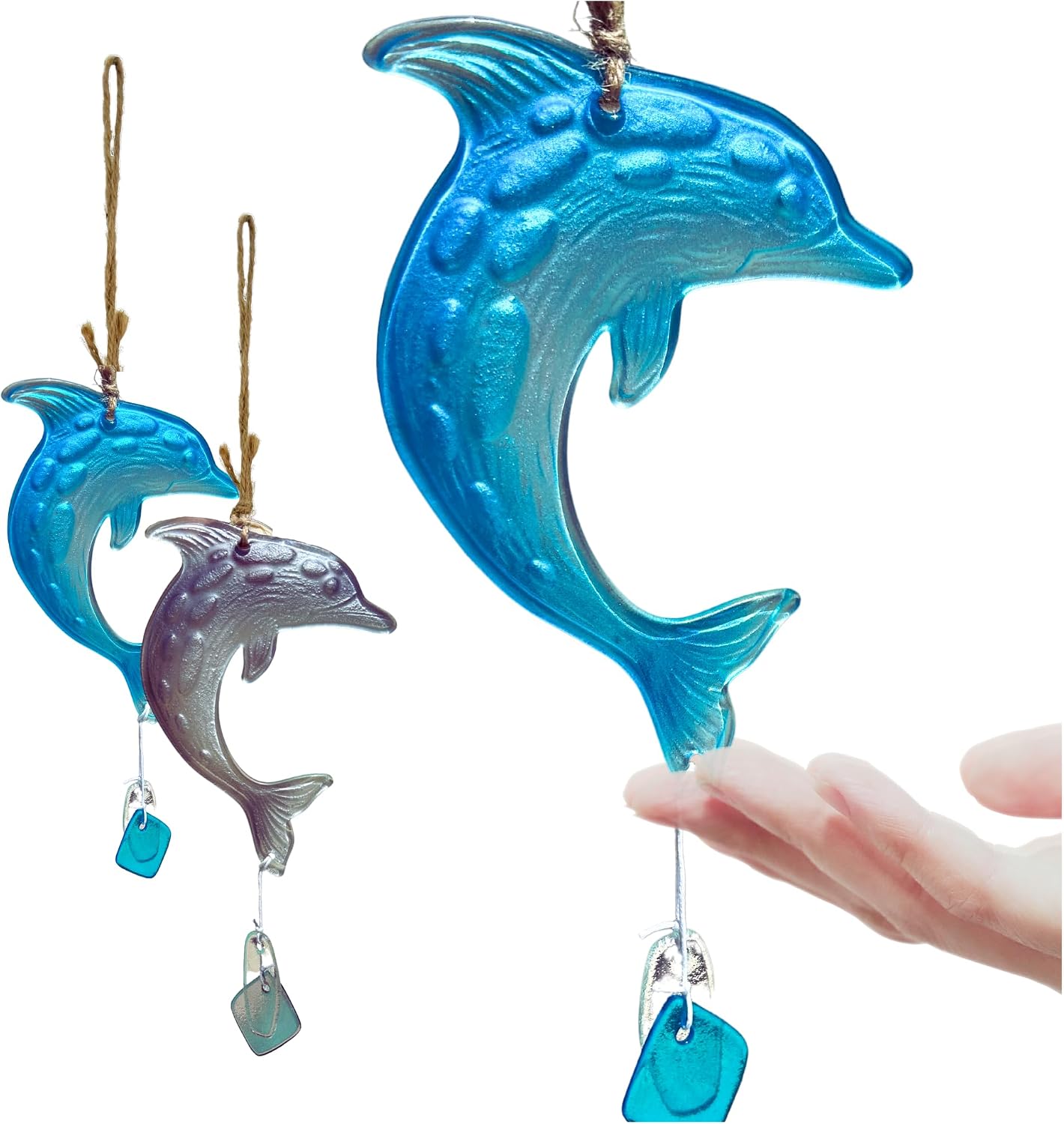
Set of 2 Beachy Glass Dolphin Ornaments with Natural Twine
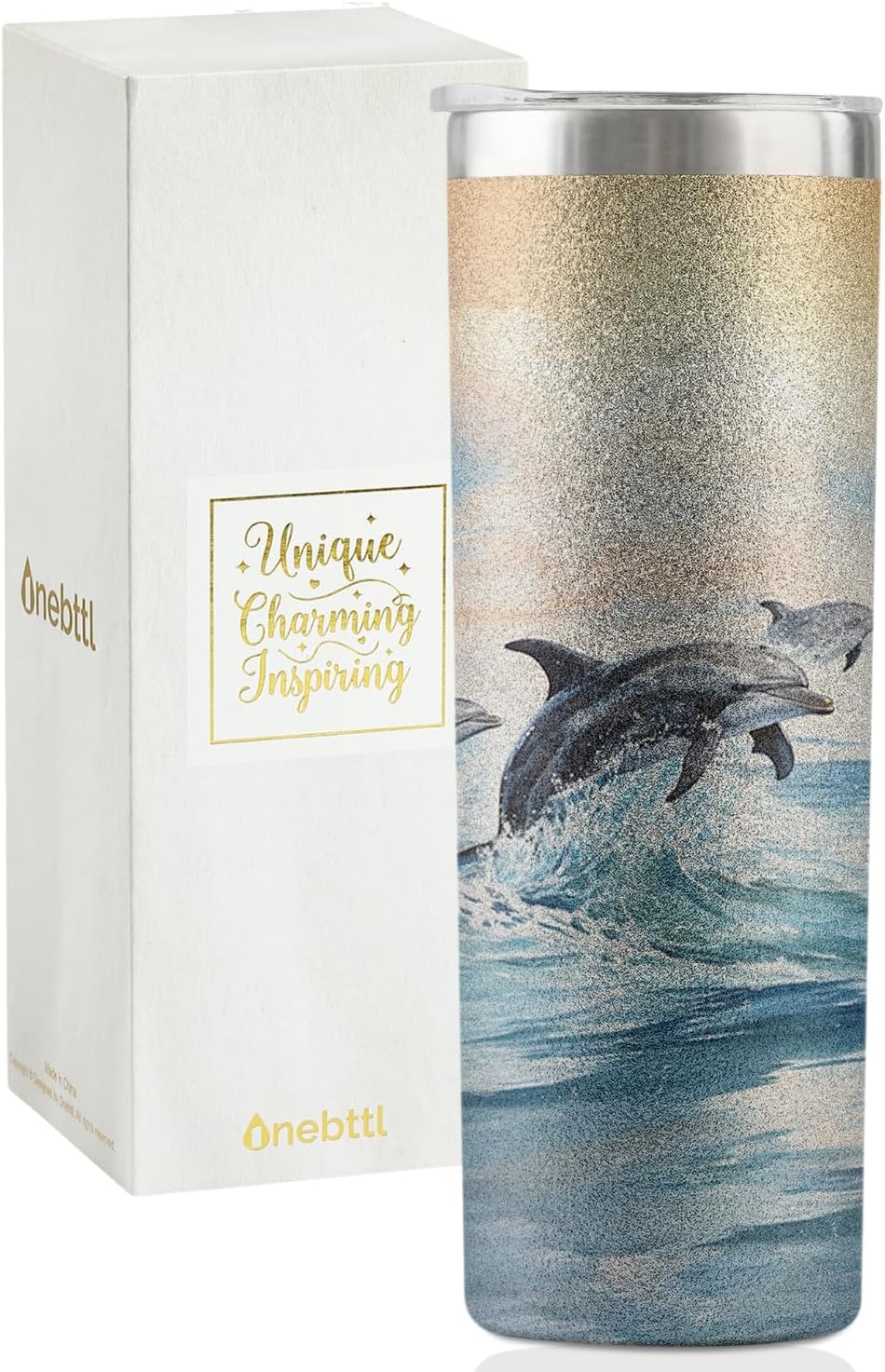
Dolphin Gifts for Women, 20oz Stainless Steel Tumbler with Lid & Straw
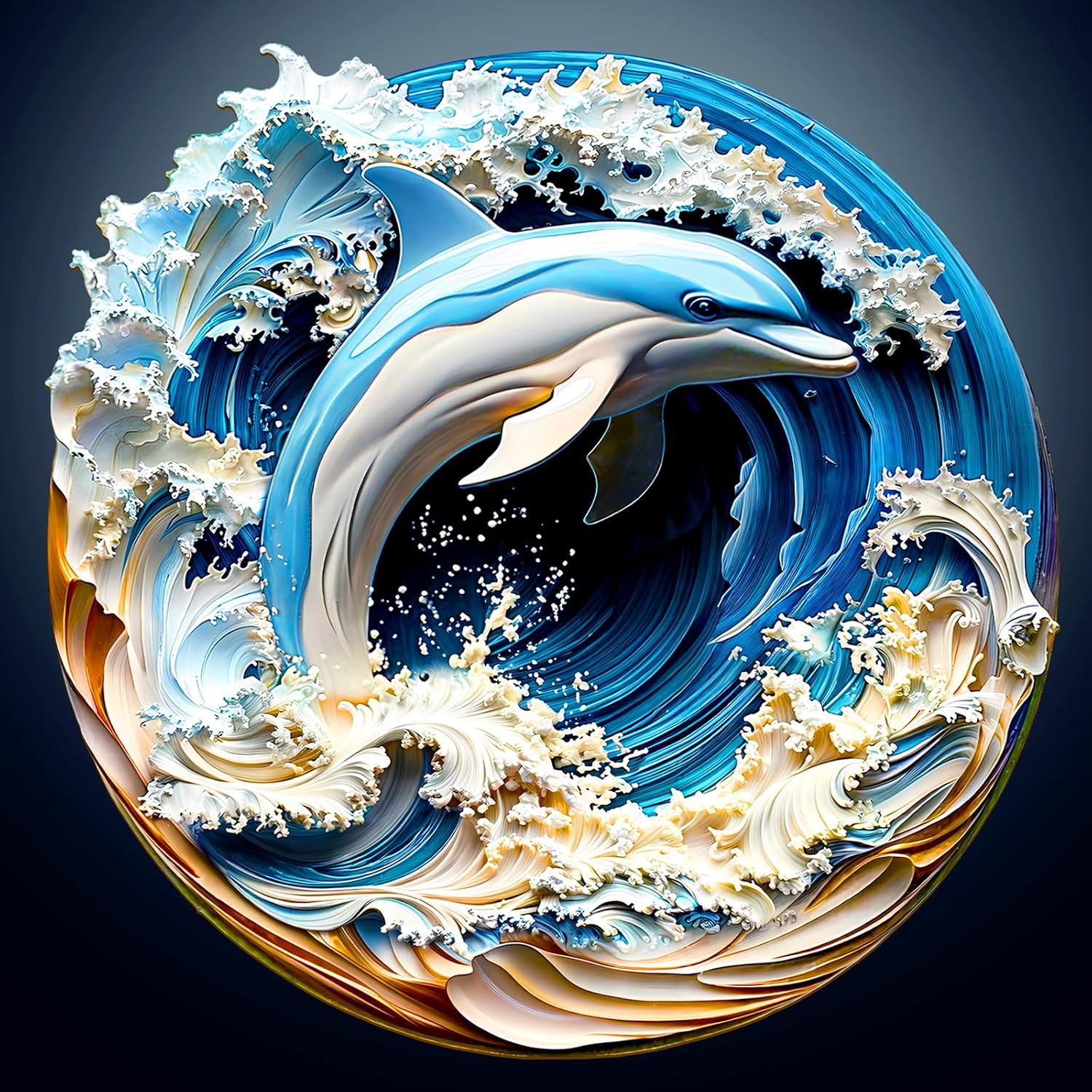
Dolphin Wooden Jigsaw Puzzle
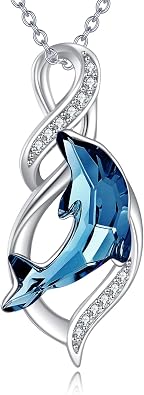
Dolphin Necklace, 925 Sterling Silver Infinity Love Pendant
Dolphin Decorative Trinket Tray

Pink Pastel Dolphin Ocean Notebook Journal, 5.5x8.3