← All Species
Cephalorhynchus commersonii
Commerson's Dolphin
Least Concern
Also known as: Skunk Dolphin +3 more
Cephalorhynchus commersonii
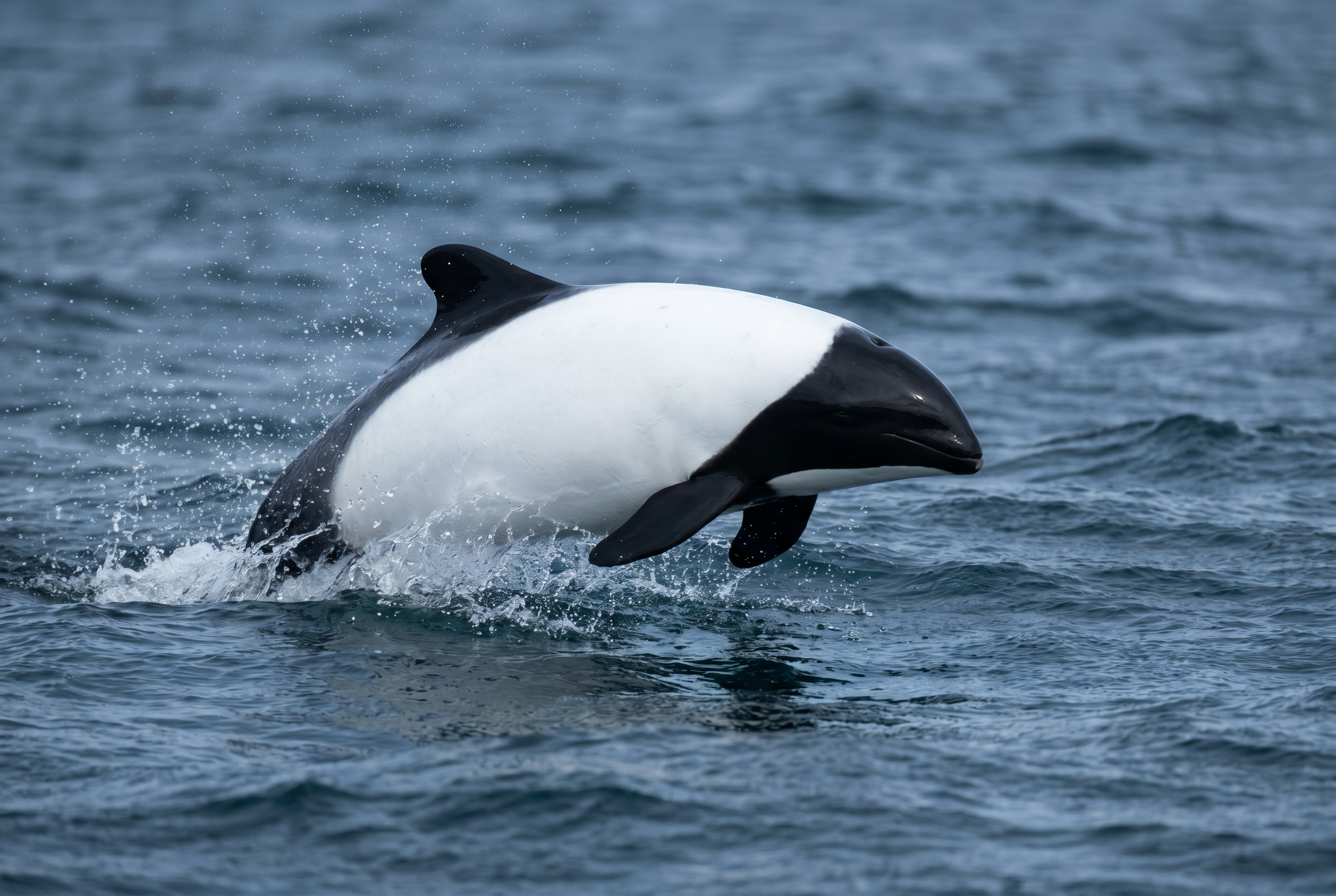
One of the most striking dolphins in the world — bold black-and-white coloring that resembles an orca in miniature. The head, dorsal fin, pectoral fins, and tail are jet black; the midsection is pure white. The body is torpedo-shaped with no beak — just a rounded snout. Despite their small size, they are extraordinarily energetic swimmers.
Commerson's Dolphins have well-developed hearing and echolocation. Their high-frequency click production is similar to porpoises. Vision is good in clear Patagonian coastal water.
Commerson's Dolphins produce high-frequency clicks and burst-pulse sounds. Like other Cephalorhynchus species, they do not appear to produce the signature whistles typical of larger delphinid dolphins.
Hunt in small groups, cooperatively herding small schooling fish and squid in shallow coastal waters. They are incredibly maneuverable, using their flexible bodies to chase prey through kelp forests and rocky inshore areas.
Gestation
Approximately 10–11 months. Females give birth every 2–3 years. Calving occurs in austral spring (November–January).
Birth
Calves are approximately 24 inches long and weigh 10–15 lbs at birth. Born tail-first.
Calves
Calves nurse for approximately 18 months and remain with their mothers for 2–3 years. Calves are darker than adults, lightening gradually to the adult black-and-white pattern.
Females reach sexual maturity at approximately 5–8 years; males at 6–9 years.
Found in pairs or small groups of 2–8 individuals. Occasionally forms loose aggregations of up to 100 when feeding.
One of the fastest small dolphins — reaching speeds of 12+ mph. Famous for energetic bow-riding and surfing in the wakes of ships.
Commerson's Dolphins are sometimes called Panda Dolphins for their striking coloring. The Kerguelen Island population is slightly larger than the South American population — the two have been separated for hundreds of thousands of years.
18+ years. Threats include accidental capture in gill nets and trawls, deliberate killing for crab bait, boat strikes, and climate-driven changes to prey availability.
Dolphin Store